
Have you noticed those annoying reflections on your prescription glasses? That greenish or purplish sheen that hides your eyes, or the light halos that tire them out when you drive at night? Anti-reflective lenses are designed to eliminate these issues and deliver a clearer, more comfortable view. But considering comfort, durability and care, is it really the right choice for everyone?

An anti-reflective coating is made up of multiple layers that interact at the lens surface to reduce light reflection and increase the amount of light transmitted. As a result, it delivers exceptional visual comfort by eliminating distracting and unaesthetic reflections that can affect your field of view—especially when driving at night, when oncoming headlights can dazzle you or appear doubled.
AR coatings (anti-reflective/antireflective) consist of successive layers whose composition varies depending on the range you choose. The more advanced the technology, the more durable, transparent and resistant the result.
What is an anti-reflective lens?
An anti-reflective lens is not a different lens material, but a surface treatment applied to the optical lens—whether organic, mineral (glass) or polycarbonate. These ultra-thin layers, often invisible to the naked eye, create optical interference that reduces stray reflections and increases useful light reaching the eye. The result: less glare, better visual acuity and improved contrast perception.
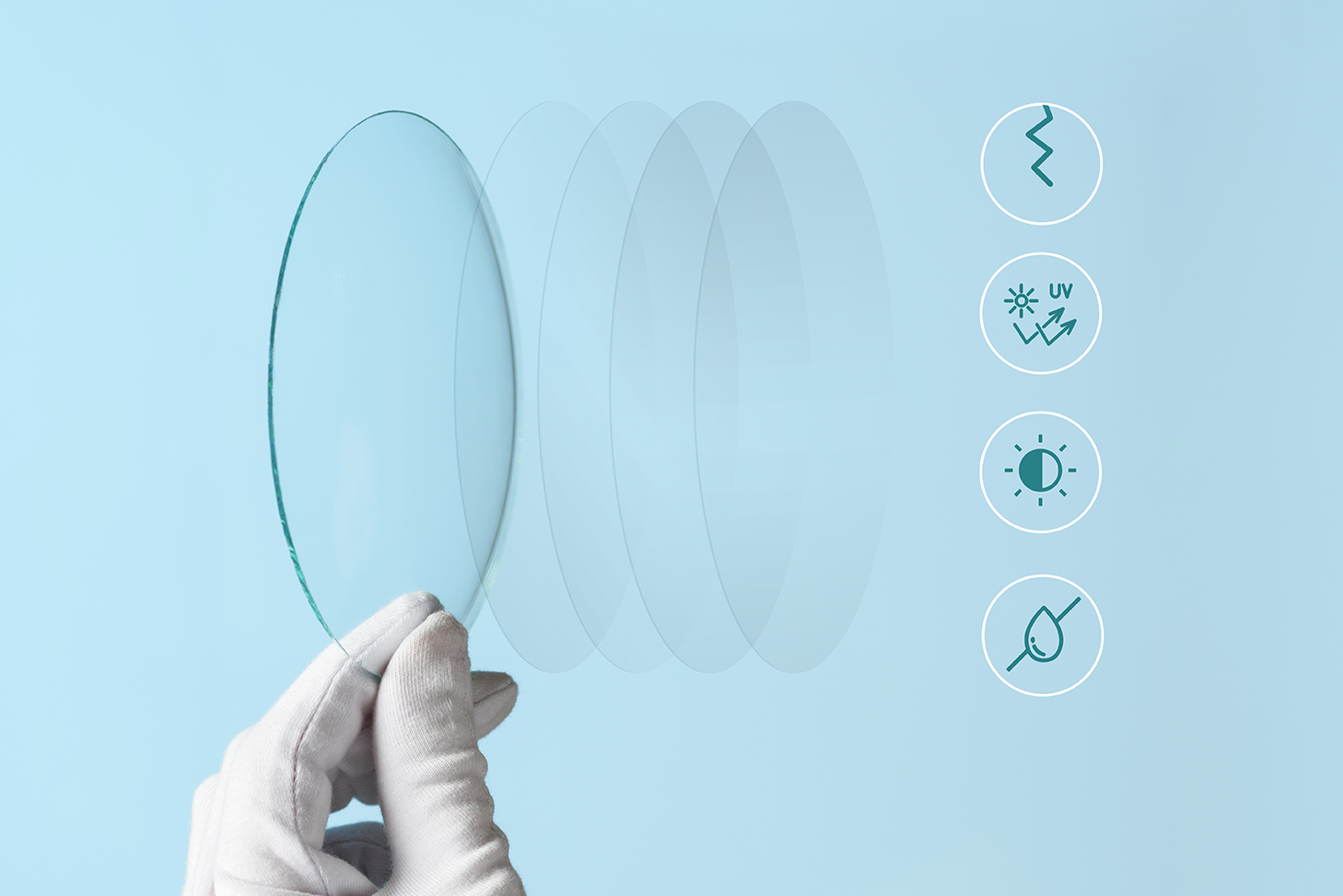
The principle is based on light reflection which, without treatment, occurs on both the front and back surfaces of the lens. The AR coating acts like a smart filter: it lets useful light pass through while cancelling part of the reflected light. Variants include classic AR, hydrophobic, scratch-resistant, anti-smudge (oleophobic) and even anti-fog finishes depending on your needs.
The benefits of anti-reflective lenses
Less glare, more visual comfort
Anti-reflective lenses reduce glare caused by headlights, screens or sunlight reflected off shiny surfaces (roads, windows, windshields). By removing these distracting reflections, your eyes remain more relaxed and your vision more stable—even in bright light. Eye comfort is significantly improved, particularly for frequent drivers and screen users.
Cleaner, more transparent aesthetics
Another often-overlooked benefit is the look. The AR coating makes the lens appear almost invisible: it removes the shiny veil that can hide your eyes. The result is more transparent, more minimal, and better showcases both the frame and the wearer’s eyes.
A more natural view
The coating improves light transmission and colour perception. Contrast is restored more faithfully, and vision appears clearer and more natural—without mirror effects or ghosting. This is most noticeable in low-light conditions or in front of intense blue-light sources.
Enhanced protection against scratches and smudges
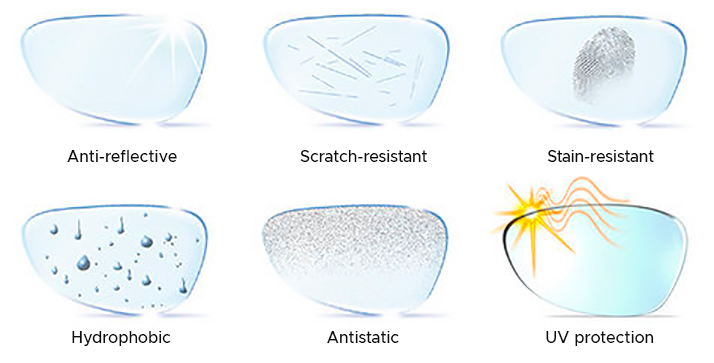
High-end AR-treated lenses feature scratch-resistant, hydrophobic and oleophobic layers. These finishes prevent dirt and grease from adhering, making cleaning easier and extending lens lifespan.
A concrete example: Neva® Resist + UV treatment
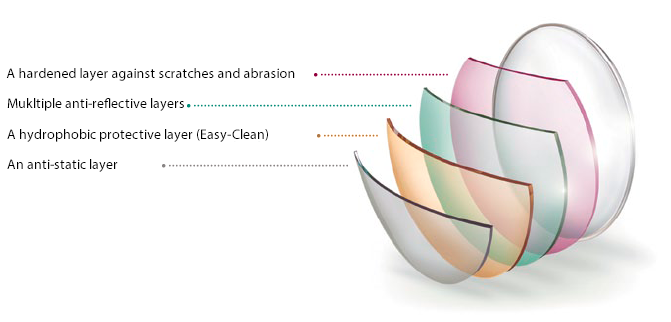
The Neva® Resist + UV anti-reflective solution offered by Visiofactory brings these technologies together to deliver superior visual performance. This multi-layer treatment includes:
- A hard coat layer to make the lens more resistant to scratches (though not scratch-proof).
- A UV-blocking layer to help protect the retina from harmful rays.
- An AR layer to reduce reflections and improve visual contrast.
- An oleophobic layer that repels oils for easier cleaning.
- An antistatic layer that prevents dust from clinging to the lens.
- A layer that improves resistance to micro-scratches and heat.
- A hydrophobic layer that prevents water retention for effortless cleaning.
This treatment is especially recommended for thinned (high-index) lenses to achieve optimal optical quality. On sunglasses, it is primarily applied to the back surface (eye side), as that is where rear-surface reflections are most disturbing.
Limitations or drawbacks to consider
Slightly higher cost
AR-treated lenses cost more than untreated lenses, but the comfort and durability you gain more than make up for the difference. Over time, it’s a sound investment in your comfort and eye health.
More delicate care
Multi-layer coatings can be sensitive to harsh products. To preserve the treatment, clean your lenses with lukewarm water and mild soap, then dry with a clean microfiber cloth. Avoid white vinegar, household wipes and abrasive papers, which can damage the surface.
AR vs. standard or polarised lenses
An untreated lens shows many reflections, especially in bright light or with direct light sources. Polarised lenses, on the other hand, filter horizontally reflected light—very useful outdoors or while driving. The anti-reflective coating is therefore complementary: it acts on surface reflections, while the polariser acts on the light itself.
Photochromic lenses darken outdoors and become clear indoors. Adding an AR coating improves indoor transparency and the clarity of transitions between different lighting conditions.
How to care for anti-reflective lenses
Best practices
Rinse your lenses with lukewarm water to remove dust, apply a drop of mild soap, then gently wipe with a microfiber cloth. This simple routine protects the surface treatment and maintains performance over time.
Avoid
Window cleaners, alcohol wipes or white vinegar should be avoided: they can attack AR layers and reduce their effectiveness.

For clearer vision, every day
Anti-reflective lenses are not just a technical detail: they upgrade your everyday visual experience. Less glare, less eye strain, more clarity — all the ingredients for better visual well-being and higher-quality eyewear. For active people, frequent drivers or fans of discreet, premium aesthetics, it’s a logical, long-lasting choice.
At Visiofactory, every pair is built around your needs: progressive lenses, photochromic, polarised, or high-end anti-reflective options from brands such as Essilor. Because a beautiful frame deserves lenses to match — and a clear gaze starts with sharp, comfortable vision.
Explore our anti-reflective options on Visiofactory (EN) and find the perfect combination for your lifestyle. You can also browse our full selection of frames here: All eyeglass frames.


